

Forest Service Travel Rule: What It Means for Colorado
The Forest Service wants national forest roads and trails open by default instead of closed by default.
The Forest Service did not open Pike-San Isabel National Forest (the Front Range backyard forest a lot of us call “the Pike”) to motors this fall. What they floated is quieter and weirder: a future where existing roads and trails start open by default, and someone has to make the case to close them.
That’s the whole fight, Zealots, and Facebook already turned it into two opposite panic posts. One side heard “the gates are open.” The other heard “the forests are doomed by Tuesday.” Neither happened. What happened is a 2026 Federal Register notice that tries to flip the default of how the Forest Service decides where we get to drive, then hands the real decisions back to each forest, one route at a time 1.
I’ve spent enough Saturdays with a Motor Vehicle Use Map (MVUM) folded on the passenger seat, squinting at a dotted line and wondering if “that two-track” counts, to care a lot about this. So here’s where things stand as of mid-October: the comment window closed Sept. 23. Your map didn’t change. The next real moment is spring 2027. Let’s get into it.
What the notice actually flips
Right now the rule is simple and kind of brutal: closed unless designated open. Since the 2005 Travel Management Rule, every forest has had to designate which roads, trails and areas allow motor vehicles, and anything not on the MVUM is off-limits to motors, signed or not 6. Most of us have learned to live inside that map. Some of us have learned to resent it.
The notice USDA published Aug. 24, 2026 (91 FR 54686, document 2026-17211) proposes flipping that logic. Existing roads, trails, trailheads, airfields and other access points would be presumed open to "appropriate public use" unless a closure is required by law, valid existing rights or another governing document, or is backed by "specific, documented and justifiable reasons" tied to science-based resource conditions, public safety, conflicts among uses, or maintenance and administrative capacity 1.
The second big swing is quieter but bigger: the notice proposes removing the national minimization criteria, the standard that's required managers to minimize damage to soil, water, wildlife and conflicts between users when they designate motorized routes 1 3. Off-road advocates call that the burden-of-proof flip. For years, as Colorado Off Road Enterprise's Marcus Trusty put it, the motorized side had to prove a route would barely touch anything; this changes who has to make the case 3.
There's a third piece I think gets slept on: every unit would have to review its closed or highly restricted routes every year, subject to available appropriations, and flag which ones might be reconsidered 1. That sounds like a win for access until you remember who's going to do that review: the same ranger districts that already can't keep up with culverts and washboards. The Wilderness Society's Dan Hartinger raised exactly that question about staffing and the maintenance backlog 3. A presumption of open on paper is only as real as the crew available to sign off on it.
One more nerd detail that matters: this is a notice of intent to prepare an environmental impact statement, not a proposed rule. No regulatory text exists yet. It describes what USDA plans to propose and the alternatives it'll study 1 5. We're arguing about a blueprint, not a building.
What it explicitly does not do (Gold Camp didn't change)
I'm putting this in bold because it's the question I keep getting: no road, trail or shelf road in Colorado changed status because of this notice. Not Gold Camp Road outside Colorado Springs. Not anything in the Pike. Not the spot you got turned around on last summer.
The notice says it in plain language. The presumption "would guide future decisions and would not itself change the legal status of any road, trail, airfield, trailhead, area, or other access route or point," and existing motor vehicle use designations and maps "would remain in effect until revised under the amended regulations" 1. The Forest Service's own release says the same: existing designations and maps stay valid until updated at the local level 2.
It also doesn't touch designated wilderness. Indian Peaks and Maroon Bells-Snowmass stay closed to motors by law, not by travel plan 3. Where it could matter is the regular national forest land wrapped around those areas, which is part of what worries conservation groups.
And even the motorized side isn't selling this as a free-for-all. Chad Hixon of the Trails Preservation Alliance, which has been fighting for Colorado motorized access for years, told the Colorado Sun flatly: "It's not just a free-for-all" 4. When the guy who'd benefit most is telling you to calm down, maybe calm down a little.
Game retrieval, firewood, dispersed camping and the e-bike sleeper fight
This is the section where the rewrite could actually change somebody's day.
The notice proposes processes and conditions for limited off-route motor vehicle use for, among other things, downed big-game retrieval, firewood collection and dispersed camping, plus designating areas for over-snow and other motorized recreation. For each, the rule would spell out whether it runs through a designation, a written authorization or a categorical exemption, with geographic, seasonal, vehicle-class and resource-protection conditions attached 1.
Translation for the elk-hunting Tacoma crowd: today, on most units, driving off a designated route to pack out a bull is a violation, period 5. The proposal could carve out a legal path for that. "Could" is doing a lot of work, because the conditions don't exist yet. Nobody should be driving into a meadow this November on the strength of a notice of intent.
Then there's the one I think becomes the real brawl: class 1 e-bikes. The proposal would exempt pedal-assist class 1 e-bikes from motor-vehicle designation requirements on any Forest Service trail where regular bikes are already allowed, subject to local restrictions. The EIS will also study an alternative that keeps them classified as motor vehicles 1. That's a much bigger deal for Front Range singletrack than anything involving a GX, because it changes who shows up on non-motorized trails, and it's the kind of thing that sounds minor until it's your favorite trail. Keep an eye on this one. It might end up being the most fought-over line in the whole rewrite.
Colorado's stake: 11.3 million acres and two of the busiest forests in the country
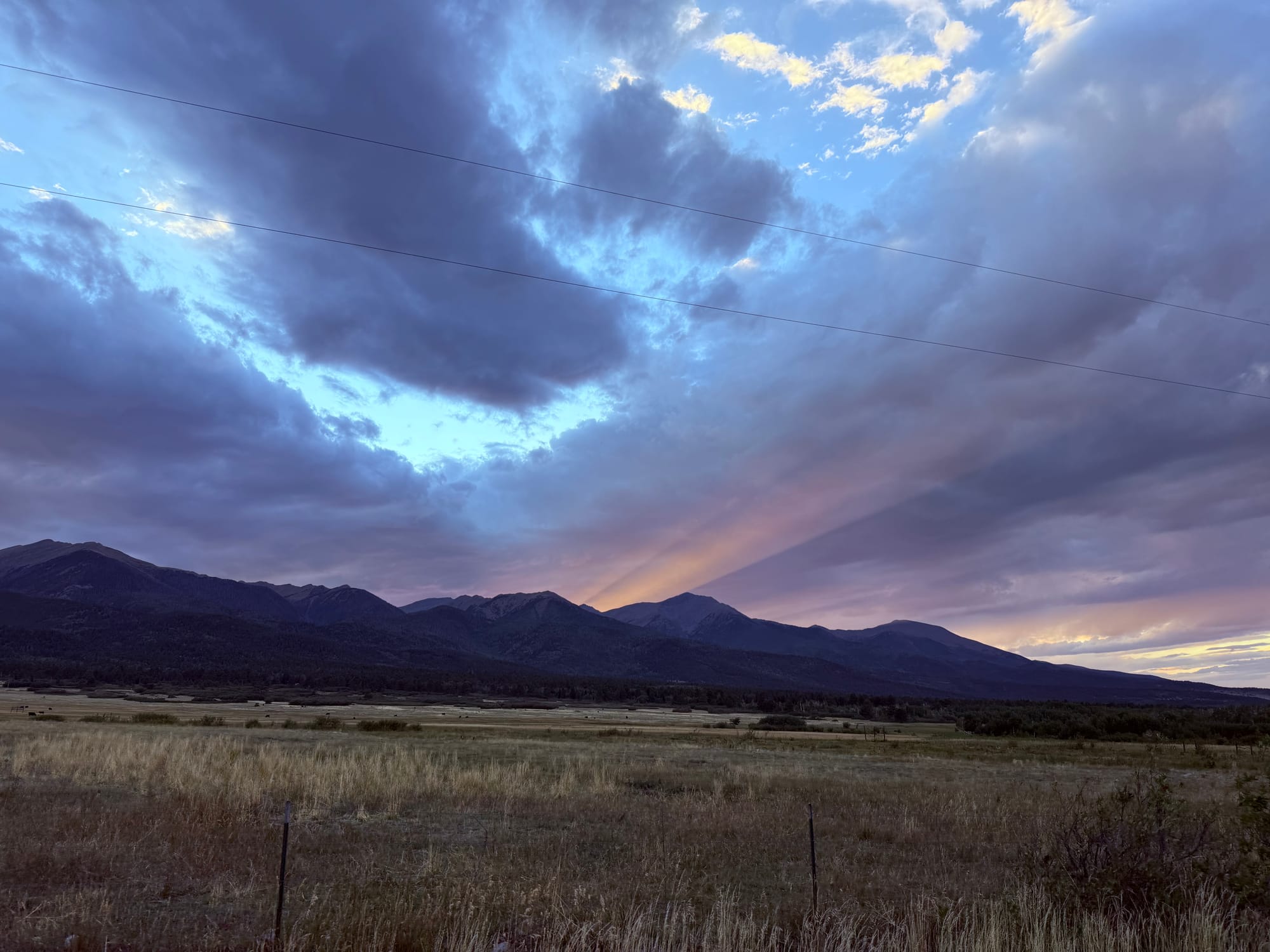
Colorado isn't a bystander here. The Forest Service is the state's largest public-land manager, overseeing about 11.3 million acres, more than 17,600 square miles. That's bigger than Maryland, Delaware and Rhode Island combined 3. Nationally, Chief Tom Schultz puts the system at more than 380,000 miles of road and 165,000 miles of trail 2.
Big numbers, sure. Here's why they matter to us: Colorado is home to two of the ten most-visited national forests in the country, the White River and the Arapaho and Roosevelt, according to Hartinger 3. Add the Pike-San Isabel, the Colorado Springs and Front Range backyard where a lot of us learned to air down, and you've got the places where any change in default thinking hits hardest. Busy forests mean more user conflicts, more wear, and more reasons on file to justify a closure, which is exactly the kind of local fight the new framework would kick off.
The motorized side has its own Colorado math. Hixon says that of roughly 28,000 miles of singletrack in the state, only about 2,800 miles are open to motorized use 4. That's his number and his framing, but it explains why dirt-bike clubs are, in the Sun's phrasing, "ecstatic."
One Colorado-specific footnote: officials say the state keeps its own separately negotiated roadless rule, so the national roadless rescission doesn't apply here 4 3. That's a different rule from travel management, and people keep mixing the two up.
The competing claims (minus the yelling)
I'm not interested in turning this into a team sport. Both sides have points that should land with anybody who actually spends time out there.
The access case: MVUMs are often out of date and inconsistent between districts. Anyone who's tried to match a paper map to a forest road knows the feeling. Legal routes take pressure off the few that are open, and, in Hixon's words, "Access can deter people from doing the wrong thing" 4 5. Trusty's point hit home for me: he hikes, backpacks and climbs too, and most people use a vehicle on Forest Service roads just to get to a trailhead at all. "We don't want unchecked, unfettered access and people destroying things," he said. "We just want the opportunity for the public to enjoy places we like to go" 3.
The wildlife, noise and fire case: Road density tracks with where elk and mule deer can actually hold, and more studies are linking noise to worse wildlife outcomes, Hartinger said 3. Earthjustice's Tom Delehanty warned about more off-road use degrading landscapes and pointed to fire risk, since more than half of Western wildfires are human-caused 3 4. The Center for Western Priorities argues the rewrite moves decisions away from forest-by-forest public input 4.
The middle, which is where I actually live: Backcountry Hunters and Anglers' Ryan Callaghan said some areas are appropriate for more motorized use, but expansion in one place should come with wildlife sanctuary somewhere else, and that these revisions don't build that in. The Rocky Mountain Elk Foundation backed local, unit-level decisions while supporting seasonal closures for calving, fawning and winter range 5. As someone who wants both a good shelf road and a healthy elk herd, that's the conversation I want to be in.
Timeline: why 2028 is the real date
Here's the calendar, and none of it is next week:
- Aug. 21, 2026: Forest Service announces the notice 2
- Aug. 24, 2026: Notice published at 91 FR 54686 1
- Sept. 23, 2026: Comment period on the notice closed. The public docket, FS-2026-0100, logged 134,377 comments as of Sept. 26, after the window closed 7
- Spring 2027 (anticipated): Proposed rule and draft EIS, which is the first time actual regulatory text shows up 1
- Early 2028 (anticipated): Final EIS, record of decision and final rule. The notice itself says the schedule is "subject to change" 1
Then, and only then, comes the part that actually touches your tires: individual forests revising their own designations under the new rules, district by district. Hixon doesn't expect the rule to get through before 2028 either 4. Litigation could stretch it further. Conservation groups told the Sun they're already looking to Congress and the courts 4.
So "Colorado could get a lot more motorized by default" is fair as a possibility. It's a multi-year, forest-by-forest possibility, not a switch somebody flipped in August.
What to actually do if you're running Colorado trails this winter
This is the most boring advice I'll ever give you, and it's the right advice: the map on your dash still rules, not the press release.
- Download the current MVUM for the district you're in. Pike-San Isabel posts them by district as free PDFs that work in the Avenza app 6. If a route isn't on the MVUM, it isn't open to motors, signs or no signs.
- Grab the new year's map in January. Pike-San Isabel says MVUMs are updated annually in January for corrections and travel decisions, or stamped "Valid for Year 20__" 6. Any change you see in 2027 will come from a normal local decision, not this national rewrite.
- Respect the season dates. A lot of Colorado routes are designated by season. Winter closures on the map are still winter closures.
- Don't freelance on game retrieval or off-route camping. The off-route provisions are proposals with no conditions written yet 1. Pack out the old way this season.
- Got a specific route question? Call the ranger district. Not a Facebook group. Not a rulemaking notice. The district is where these decisions will eventually get made anyway 5.
Wherever you land on the rewrite, being the driver who knows the map, stays on the route and leaves the gate the way you found it is still the best argument for access that any of us can make.
See you out there, Zealots. Same map as last week.
Sources
- Federal Register notice: Travel Management; National Forest System Lands (91 FR 54686, Aug. 24, 2026)
- Forest Service newsroom release: Forest Service moves forward to revise travel management rule (Aug. 21, 2026)
- Denver Post, Sept. 8, 2026: Federal rule change could open Colorado forests, trails to motorized vehicles
- Colorado Sun, Sept. 16, 2026: Off-roading on federal lands in Colorado could expand
- HLRBO explainer: What the Forest Service Wants to Change About Forest Roads (Sept. 22, 2026)
- Pike-San Isabel Motor Vehicle Use Maps page (Forest Service)
- Regulations.gov docket FS-2026-0100
Written by