
VW Ladder-Frame Offensive: Trail Truck or Theater?
VW just admitted it has no ladder-frame game in America. Now the question: trail-ready truck or just theater?
VW just admitted it has no ladder-frame game in America and wants one; now the only question is whether the resulting truck will be trail-ready or just another soft-road marketing exercise.
I've watched enough “rugged” teases die on the PowerPoint vine to be allergic to vibes. So let's do what AutoZealot does; pull the quotes, check the plant, stare at the competitive set, and ask whether this is a real Tacoma/4Runner fight… or just for show.
What Blume/Schäfer actually said and the timeline signals
Start with language, not vibes.
According to a Bloomberg report from Sept. 10, 2026 (republished with the same transcript excerpts by CNBC TV18) Volkswagen Group CEO Oliver Blume told investors the company lacks vehicles built on ladder frames, the truck-style architecture Americans associate with serious off-roaders and pickups. He framed rugged SUVs and pickups as “profit pools still not played by Volkswagen Group,” then added: “And there, you know about the activities in Scout, but more than this.” He pointed to opportunities for both Audi and the Volkswagen brand, and indicated such vehicles would be made in the U.S. [1] [2]
CFO Arno Antlitz was even colder. On the same call he basically shrugged at the current U.S. volume mix (Jetta and Taos shipped from Mexico) and said you don't need much imagination to see how ugly those margins look under tariffs. For the VW brand specifically: “it's too early to make an announcement,” while the company steers toward segments “more promising in terms of margin.” A VW spokesman declined further comment. [2]
A week earlier, Passenger Cars CEO Thomas Schäfer had already planted the North America flag. On Sept. 3 he said VW would pursue a dedicated U.S. strategy and “explore opportunities in the highly popular body-on-frame B-segment, including robust SUVs and pick-up trucks.” Road & Track and CarBuzz both carried that language; neither claimed a locked platform, nameplate, or start-of-production date. [3] [4]
Timeline signal, stripped of hype: exploratory, margin-driven, U.S.-build preference, Scout mentioned as context not a finished answer. No firm VW- or Audi-badged SOP. If you're waiting for a 2027 TRD Pro fighter on a Volkswagen badge, the transcript doesn't give you that.
Why body-on-frame still wins for towing/trail/overland payload
Here's the unsexy truth Zealots already know: unibodies are fantastic at pretending. They look lifted. They wear all-terrains. They photograph like they own Moab. Then you ask them to tow a loaded overland trailer up a washboard grade, hang a fridge and a water tank on a rack, and keep the spare from becoming a pendulum and the chassis starts negotiating with physics.
Ladder frames still win the boring fights that decide whether a trip is fun or a recovery story. Tow rating that doesn't evaporate when you option the cool wheels. Frame-mounted recovery points that aren't hoping the crumple zone stays polite. Payload left after you add steel bumpers, a roof tent, and the spare you actually trust. Articulation that doesn't ask the body shell to twist like a yoga instructor.
I'm not romantic about rivets. I'm romantic about not stranding friends because marketing called a crossover “trail-rated.” Body-on-frame is still the architecture that midsize buyers and overlanders trust when the spreadsheet includes tongue weight, not just Instagram geotags. Blume naming ladder frames specifically isn't nostalgia; it's admitting the Group's U.S. DNA has been soft-road for a long time.
(Yes, the global Amarok is body-on-frame. It also isn't the American product Blume was pitching. Different buyers, different abuse profile, different tax math. CarBuzz is blunt on that point for a reason. [4])
Scout Motors as the existing VW Group play—does it cannibalize or complement?
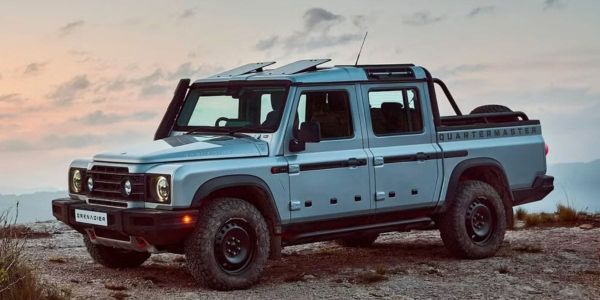
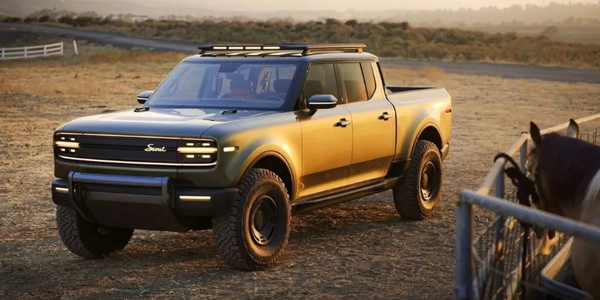
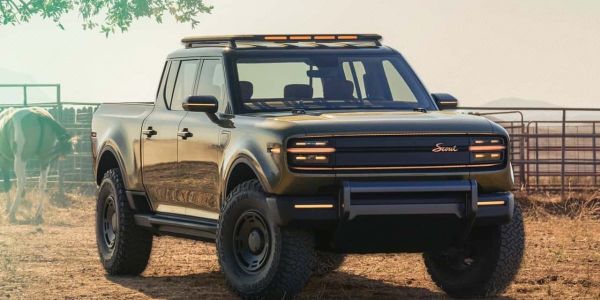
Scout is the Group's real ladder-frame project already underway.
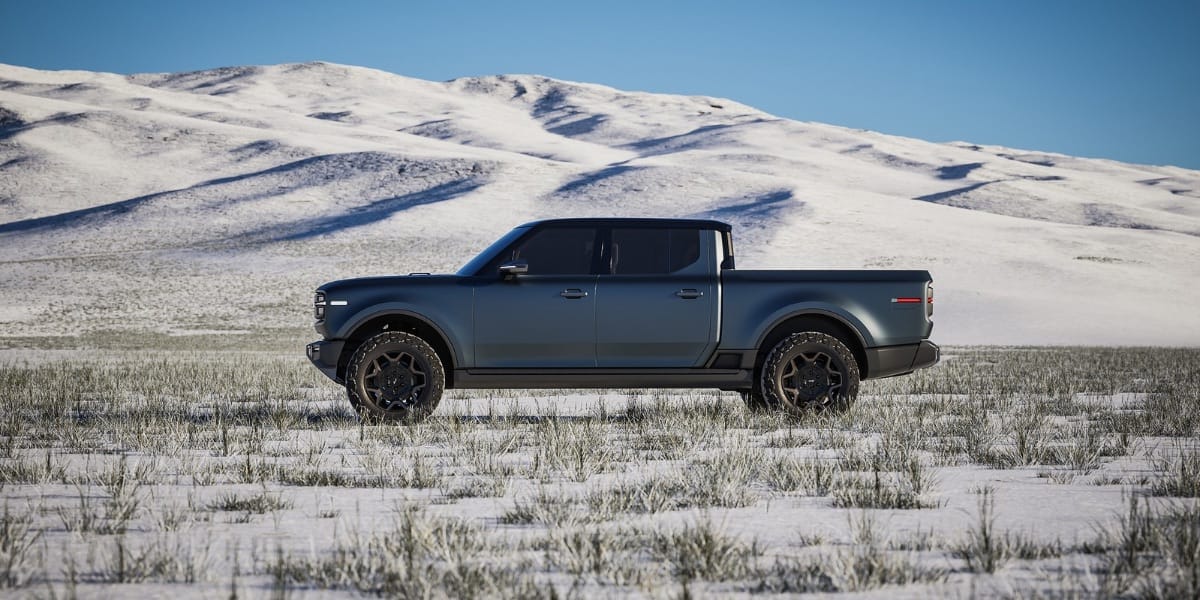
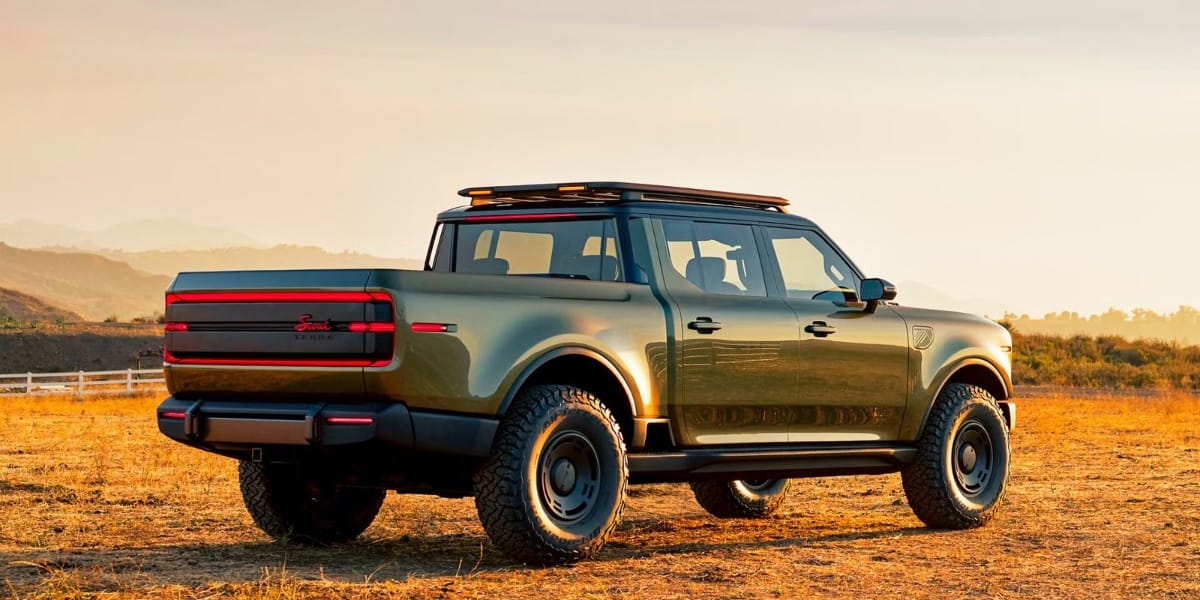
As of Scout's own September 2026 plant update, Blythewood, South Carolina is a $2 billion+ production center on 1,100+ acres, aiming for up to 200,000 vehicles/year at capacity and 4,000+ permanent jobs. The lineup is the Traveler full-size SUV and Terra full-size pickup on a new body-on-frame platform, each offered as battery-electric (Scout projects ~350 miles / ~563 km) or with the Harvester gasoline range-extender targeting ~500 miles / ~805 km (manufacturer projections, EPA TBD). Customer deliveries are still pointed at 2028. The Body Shop is running test builds; the Assembly “marriage” area (where frame meets body) is coming online. A $300 million on-site Supplier Park is progressing. [5] [6]
Suppliers are putting real steel behind that story: Sodecia and Aapico plan a $120 million Orangeburg, S.C. plant to stamp Scout ladder frames, targeting a 2027 opening. [7]
So does Scout cannibalize a future VW/Audi truck? Maybe in the dealership parking lot of your brain. Structurally, Blume's own “but more than this” line treats Scout as the existing play and as incomplete coverage. Full-size EV/EREV Scout shoppers and midsize ICE-leaning Tacoma/4Runner shoppers are not the same animals. Scout can teach the Group how to weld a U.S. ladder frame at volume. It does not automatically hand Volkswagen a midsize fighter, Audi a G-Wagen-adjacent trail toy, or either brand Toyota's parts-trust halo.
Also worth parking in the uncertainty lot: outside forecasts have floated later timing for Scout (especially Terra), while Scout keeps saying 2028 deliveries. Treat analyst SOP slips as possible, not confirmed. [8]
Bottom line for Zealots: Scout is complement-in-progress, not “problem already solved.” Anyone selling you that shortcut is selling press-release BS.
Competitive set: Tacoma TRD / 4Runner Trailhunter / Bronco / Ranger Raptor reality check
This is where soft-road marketing goes to die.
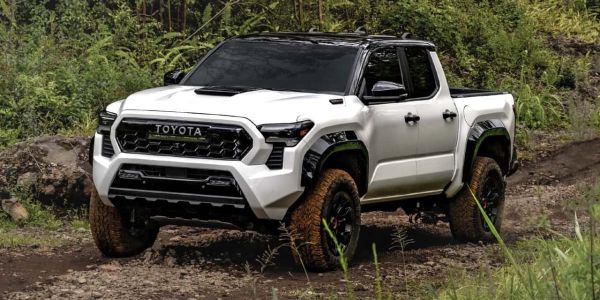
I've crawled enough trails to know buyers don't cross-shop a brochure; they cross-shop feel. Tacoma TRD Pro energy is “it'll still be worth something after you abuse it.” Current Pro talk sits around ~11.0 in (279 mm) ground clearance and approach angles scraping the mid-30s. Numbers that matter less as a flex and more as “can I crest this without a consultation with the bumper.” [9]
4Runner Trailhunter is the overland flex Toyota actually productized: 33-in tires, Old Man Emu shocks with piggybacks, ARB-flavored armor and rack, showroom-to-trail packaging. Clearance around ~10.1 in (257 mm) with approach in the low-30s depending on how you measure; again, the point isn't the spreadsheet, it's that Toyota sells trust with the geometry. [10] [9]
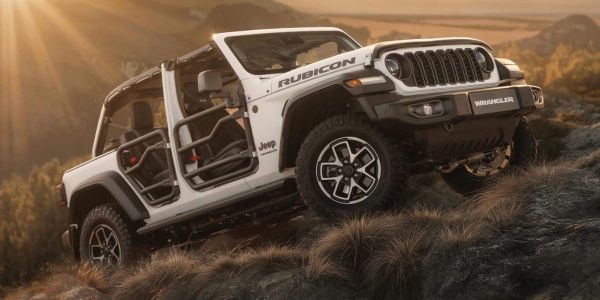
Bronco Badlands with Sasquatch is the geometry bully. Published approach/departure figures like 43.2° / 37.2° exist because Ford knew the internet would measure. It feels like a tool that expects you to remove doors and make bad decisions on purpose. [11]
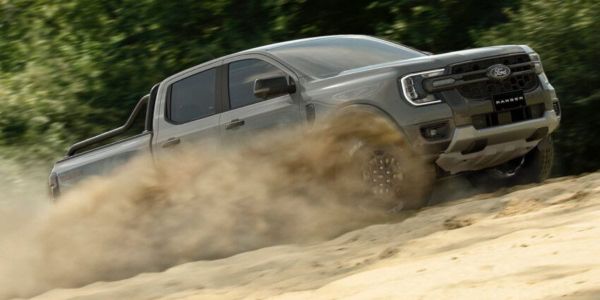
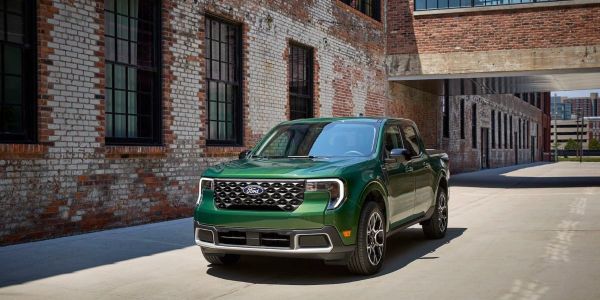
Ranger Raptor is the midsize chaos agent: Fox live-valve drama, desert-bred suspension, clearance commonly cited around ~10.7 in (272 mm). It's less “overland fridge” and more “I will float this wash at a speed that voids your calm.” [12]
If VW/Audi land in this neighborhood with soft-road angles, a timid tow number, and a parts ecosystem that makes owners wait three weeks for a control arm, Zealots will smell it. Brand loyalty in trucks isn't irrational; it's scar tissue.
Production, Chicken Tax, and tariff realities for a true U.S. build
This part is why Blume keeps saying “build it here.”
The U.S. Chicken Tax (a long-standing 25% tariff on many imported light trucks) is the reason every serious pickup story ends with a domestic plant or a very expensive shrug. Import a midsize fighter and you've already lost the price war before the first rock rail bolts on. [2]
Layer current tariff pressure on Mexico-built volume cars, and Antlitz's “you don't need much fantasy” line writes itself. VW's U.S. share sits around ~4%; Audi's U.S. sales were reported down 17% in the first half; context that makes higher-margin trucks look like oxygen, not a passion project. [2]
Scout's South Carolina footprint is the Group's cleanest U.S. ladder-frame beachhead. Whether a future VW- or Audi-badged truck shares that plant, that frame supplier stack, or a separate U.S. line is explicitly unstated. Blume did not confirm technology sharing. Anyone drawing a chalk outline of a Chattanooga Tacoma-fighter SOP is inventing fan fiction.
True U.S. build also means dealer tech training, frame-rail parts inventory, and a warranty culture that doesn't treat trail damage like a lifestyle choice you should feel ashamed of. That's the boring infrastructure soft-roaders skip and the reason Toyota still owns the trust premium.
What “rugged” must mean in 2028+ specs to matter
If VW Group wants Zealots to care after 2028, “rugged” cannot mean a cladding package and a press day in dirt that was pre-raked.
Here's my personal bar—the lived-in checklist, not a brochure:
- Geometry that survives a tape measure. Approach/departure/breakover and underbody clearance in the same conversation as Tacoma TRD / Trailhunter / Bronco Badlands; not “close enough for gravel driveway.”
- Tow and payload after options. If the cool bumper and rack eat the rating, you built a lifestyle prop.
- Recovery that isn't decorative. Frame-tied points, real skid coverage, spare that fits the tires you actually sell.
- Powertrain honesty for America. Scout's EV/EREV bet is interesting; a VW midsize fighter aimed at Tacoma buyers still has to answer the ICE/hybrid question with something owners can service in Bozeman, not just Wolfsburg.
- Parts and trust. Two-day control arms. Dealer who has seen a bent tie rod before. Resale that doesn't crater because the internet decided it's a soft-roader in cosplay.
- A timeline that isn't vapor. Exploratory in 2026 is fine. Still exploratory in 2029 with another “North America strategy” slide is showmanship.
I want this to be real. A credible German-group ladder-frame midsize would scramble the shelf. But wanting it doesn't make Blume's transcript a purchase order.
Until there's a locked platform, a plant assignment, published angles, and a parts plan that doesn't rely on hope, treat the ladder-frame offensive like what the quotes actually are: a margin strategy with Scout as the unfinished proof of concept; and a dare to escape soft-roader DNA before the press cycle moves on.
Zealots know the difference between a truck that crawls and a truck that crawls for cameras. VW just admitted it wants the first one. Now it has to build it.
Sources
Written by