
2027 Silverado ZR2: Making An Awesome Truck Better (Somehow)
Factory 35s and bump shocks used to be an aftermarket fantasy. Chevy’s 2027 Silverado ZR2 makes them the half-ton starting line.
I still remember arguing with people who swore the last ZR2 was “basically a Trail Boss with nicer shocks.” Cute take. Wrong take.
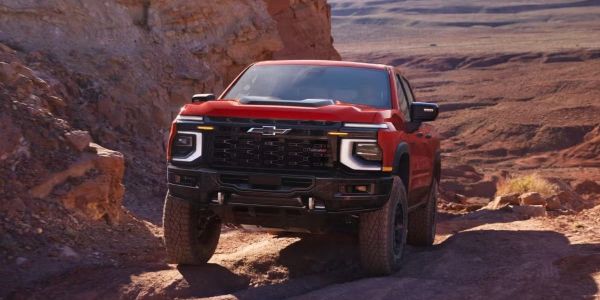
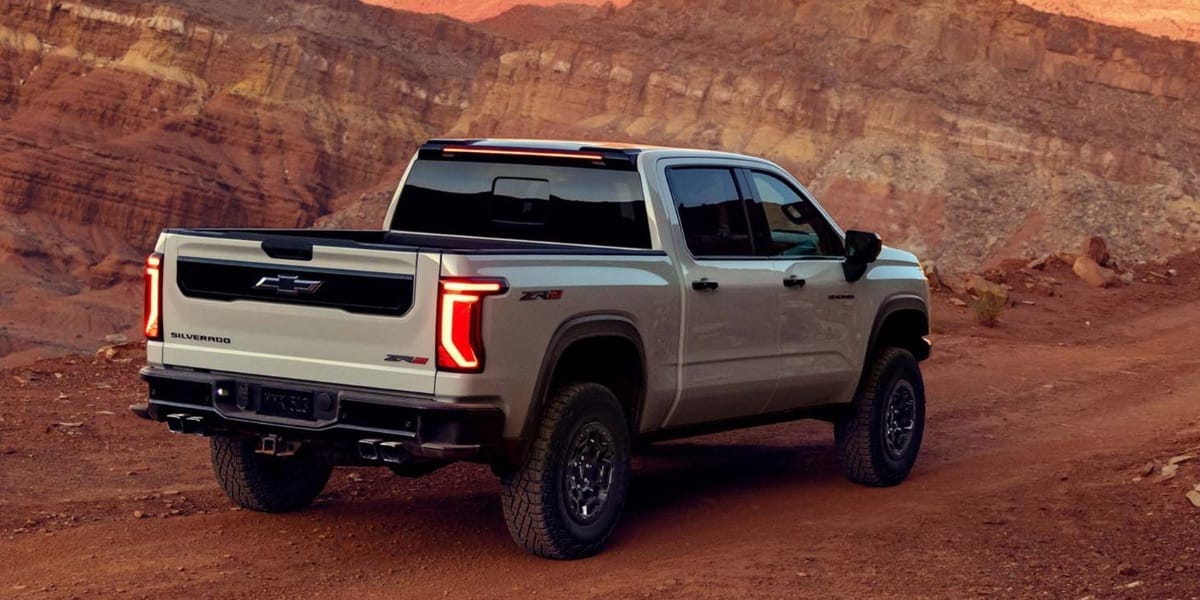
For 2027, Chevy finally stops asking you to apologize for tire size. The ZR2 steps up to 35-inch mud-terrains, keeps a 2-inch factory lift, and pairs its familiar Multimatic DSSV spool-valve dampers with jounce dampers; bump shocks that catch the ugly end of travel when the desert gets chatty.[1][2]
Front and rear electronic lockers stay standard. The off-road hood with the bigger power dome is still theater, sure; but it’s theater that matches the stance now that the rubber finally looks like it belongs under a truck that means it.[3]
That combination matters more than another brochure adjective. Tire height is clearance and approach math you feel in your shoulders. DSSV is the composure people already loved. Jounce dampers are the “please don’t punch the frame” insurance when you misread a whoop and the truck still wants to be friends afterward.
This is the new factory floor for a half-ton off-roader. Not a fantasy build sheet. Not a lift kit receipt. The truck as it rolls off the line.
Bison package role
The base ZR2 is the statement. Bison is the “I actually scrape things” package.
Chevy’s still building it with American Expedition Vehicles: AEV front and rear bumpers, rocker protection, 18-inch beadlock-capable wheels, and a proper skid suite covering the front underbody, transfer case, rear differential, and fuel tank.[1]
I love what that does psychologically. Standard ZR2 already answers the tire-and-damper argument. Bison answers the “yeah but what about the first rock that kisses the sump?” argument. It’s the difference between looking ready and packing the armor you’d otherwise buy after your first expensive learning experience.
If you’re the person who trailers bikes to the trailhead and then never leaves graded gravel, skip it. If you’re the person who has ever said “it’s fine” while listening for new noises, Bison is the adulting package.
New V8s and what they mean for trail fuel use
Chevy didn’t just dress the chassis. It swapped the heart.
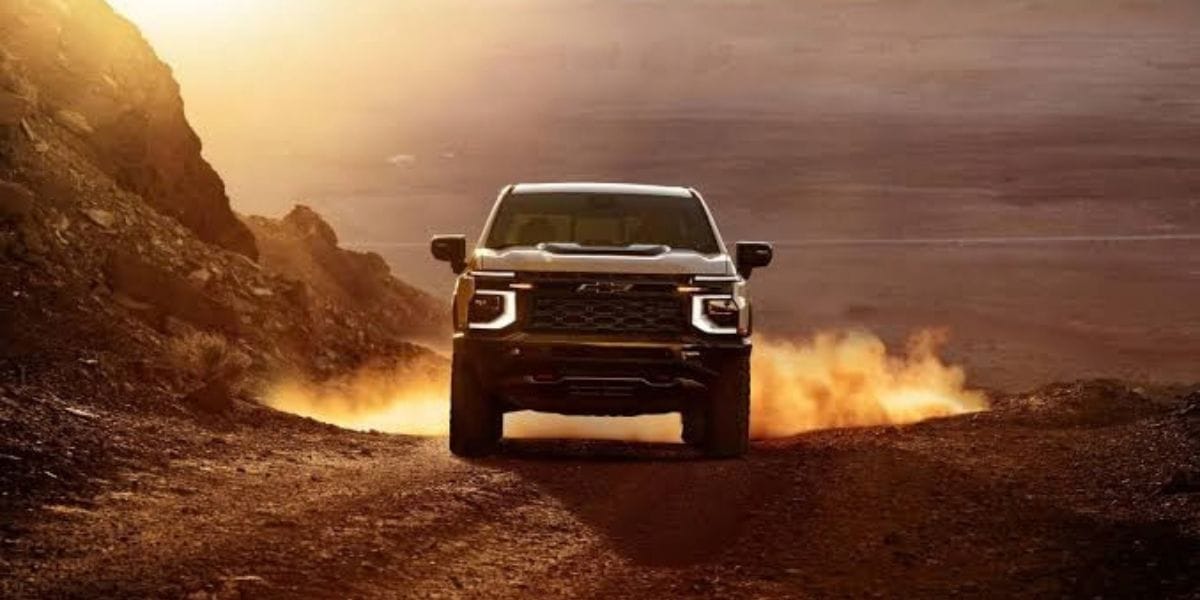
The new Gen VI small-blocks are in: a 5.7L making 402 hp / 428 lb-ft, and a 6.6L making 481 hp / 501 lb-ft, both feeding a standard 10-speed. The 3.0L Duramax and updated 2.7L TurboMax stick around for people who measure weekends in gallons, not glory.[4][1]
Here’s the trail-fuel tension I care about: 35s and lockers ask the powertrain to work. A louder V8 is fun when you’re cresting a ridge with the windows down. It’s less fun when you’re idling through a 40-mile out-and-back and realizing the nearest pump is a character-building subplot.
Chevy’s own configurator language puts Duramax and the available 6.6L in the ZR2 conversation, which is the right fork in the road.[5] Want soundtrack and tow swagger? Take the big eight and budget like an adult. Want range and cool composure when the trail turns into a logistics problem? The diesel still looks like the smarter campfire decision.
Official EPA trail-mpg storytelling for these exact ZR2 combos hasn’t settled into a clean public comparison yet, so I’m not going to invent a desert MPG fantasy. The hardware choice is the point: more power is on the table, and so is the old efficiency escape hatch.
Ordering timeline and pricing vacuum
This is the part that makes enthusiast group chats vibrate.
Enthusiast reporting from GM-Trucks says 2027 Silverado/Sierra 1500 order books opened at dealers around early August 2026, with preliminary workbench orders landing before a loud corporate parade (including documented early ZR2 retail configs) while start-of-production was tentatively eyed for mid-October. Pricing, at that reporting, had not been formally locked for shoppers yet.[6]
Chevrolet’s June reveal still framed availability and MSRP as “later this year,” with trucks expected toward year-end.[1] Chevy’s consumer site likewise keeps the cadence soft: available late 2026, order timing “later this year.”[5]
So the vacuum is real even if the paperwork is moving. You can start getting in line. You should still treat every number that floats through a dealership hallway like a weather report until your order goes final.
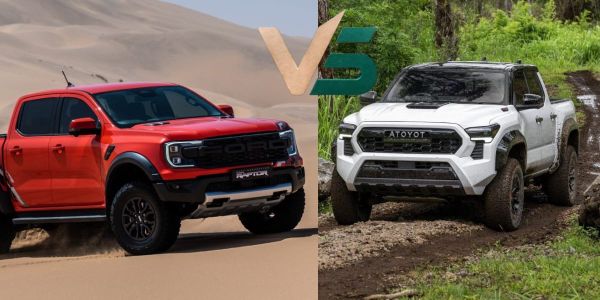
How this pressures Tacoma Trailhunter / Ranger Raptor class
This is where I get a little emotional, because I like midsize trail trucks. They’re the ones that fit in the wash, park at the trailhead without needing their own ZIP code, and still feel like tools you can abuse and forgive.
But the market math just changed.
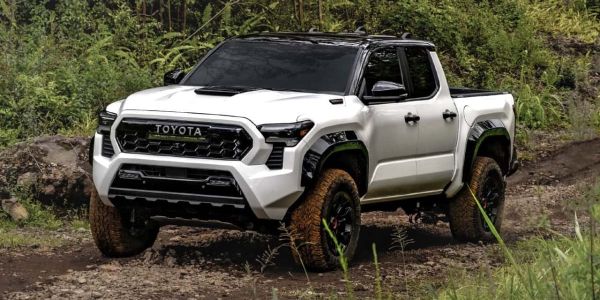
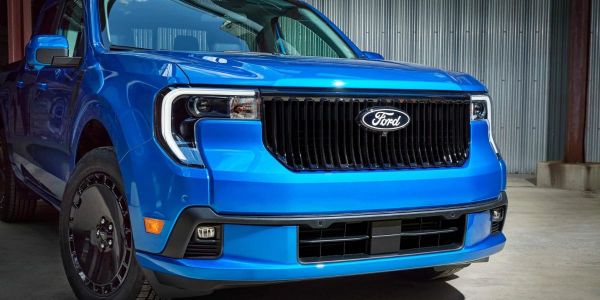
When a factory half-ton shows up with 35s, Multimatic DSSV, jounce dampers, and twin e-lockers, the midsize halo trucks (Tacoma Trailhunter, Ranger Raptor, and their cousins) stop getting to coast on “we’re the serious dirt option in a smaller wrapper.” They’re still brilliant for width, weight, and where a full-size simply won’t fit. That niche is real. I’ve squeezed through places that would leave a Silverado writing apology notes on both rockers.
What’s fading is the old brag that midsize alone owns the factory-serious damper-and-tire conversation. Full-size just raised the baseline. Quietly. With a smile. Like a friend who shows up to the group ride already aired down.
If you’re cross-shopping right now, ask the only question that matters on the trail: do you need the smaller footprint, or do you want the bigger truck’s new factory floor and the payload/tow gravity that comes with it? Either answer can be right.
Sources
- Chevrolet / GM newsroom — Next-gen 2027 Silverado 1500 reveal (ZR2 35s, 2" lift, Multimatic DSSV + jounce dampers, e-lockers; ZR2 Bison / AEV details; V8s and timing)
- Chevrolet consumer page — 2027 Silverado overview (availability cadence; ZR2 tire/lift/damper language)
- Off-Road.com — 2027 ZR2 / Trail Boss off-road updates
- MotorTrend — First look (jounce dampers / bump shocks context; 35s; lockers; Bison)
- AutoGuide — Official Gen VI V8 outputs (5.7L 402/428; 6.6L 481/501; 10-speed; year-end arrival)
- GM-Trucks.com — Order-bank reporting (dealer workbench orders; preliminary status; pricing not locked in that report)
Written by